


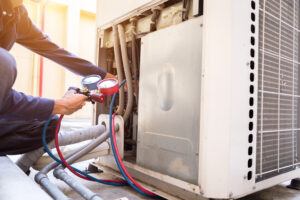
When it comes to maintaining a comfortable living space, homeowners rely heavily on their HVAC systems. However, navigating the complex world of heating, ventilation and air conditioning may be daunting, especially with those who are not familiar with the terminology.
To help homeowners understand their HVAC systems and communicate more effectively with HVAC contractors, we have compiled a list of essential HVAC terms.
Whether you’re in the market for a new HVAC system, need to troubleshoot an issue, or simply want to learn more about your home’s heating or cooling, these terms will equip you with the knowledge you need to make informed decisions and maintain a comfortable living environment.
1. Air Exchange Rate
The air exchange rate measures how quickly and efficiently fresh, outside air infiltrates into a space. It is expressed as the number of ACH – or air changes per hour – indicating the times an internal environment can transition to outdoor conditions over 1 hour.
Many AC systems have these ratings advertised for homeowners who want improved ventilation in their home.
2. Air Handler
The air handler plays an essential role in keeping us comfortable. It circulates air throughout your ductwork, making sure everyone can stay cool during summer or warm when temperatures drop.
3. Annual Fuel Utilization Efficiency (AFUE)
This is a measure of how efficiently a furnace or boiler converts fuel into heat over the course of a year.
4. British Thermal Unit (BTU)
This measure of heat energy can be used to gauge the temperature control capabilities of an HVAC system. Whether it’s keeping you cool in summer or warm during winter, this measurement helps ensure consistent comfort all year round.
Actual costs depend on your location, project scope, and materials. The best way to know what you'll pay is to get quotes from local contractors.
Get Your Free Estimate →5. Condenser
This is the outdoor unit of an air conditioner or heat pump that releases heat absorbed from indoor air.
6. Cooling Capacity
The cooling capacity is a measurement of the amount of heat the AC unit removes from a room within an hour.
"We matched with a great contractor the same day. The whole process was easy and completely free."
7. Compressor
The part of an air conditioner or heat pump that compresses refrigerant and pumps it through the system.
8. Ductwork
This refers to the network of pipes that distributes heated or cooled air throughout a home or building.
9. Evaporator Coil
Within an HVAC system, the coil serves as the location where the refrigerant takes in heat, whether from the air or a liquid. Meanwhile, the evaporator functions as the cool part of an air conditioner or heat pump, situated inside the air handler or furnace attachment.
10. Filter
The filter is the device responsible for trapping dust, dirt and other particles from the air before it is circulated through the HVAC system.
11. Freon
Freon is an air conditioning refrigerant that is widely used and is an organic compound.
Why Hire a Licensed Professional
- Licensed & insured — protects you from liability
- Warranty coverage — manufacturers require pro installation
- Code compliance — avoids permit issues
- Faster completion — pros finish in days, not weeks
12. Heat Pump
A compressor that cycles both hot and cold air. This design works as an energy exchanger, taking the heat from a cool space and transferring it to somewhere warmer.
It’s like bridging two places with opposite temperatures!
13. Indoor Air Quality (IAQ)
A measure of the air quality inside a home or building, based on factors such as temperature, humidity, and air cleanliness.
14. MERV Rating
Minimum efficiency reporting value ratings describe the size of the holes in air filters. With higher MERV ratings, filters are equipped with smaller holes that can effectively block filters from entering your space. The finer holes trap even the tiniest particles, providing you with improved air.
DIY vs. Professional: At a Glance
15. Outside Air Temperature (OAT)
A measure of the air temperature outside a building.
16. Packaged Unit or Rooftop Unit
For a space-friendly, all-inclusive climate control system, look no further than the state of the art packaged unit. Installing this solution on your roof creates a rooftop unit (RTU) which offers both heating and cooling with one compact preassembled package outside your home.
Spring and summer are the busiest seasons for home improvement projects — top-rated contractors book up fast. Lock in your estimate now before demand peaks.
Check Availability in Your Area →17. Refrigerant
Often referred to as coolant, refrigerant is a liquid found in HVAC systems that helps remove heat from the air.
18. Seasonal Energy Efficiency Ratio (SEER)
When shopping for an HVAC system, the SEER rating can be a crucial deciding factor. Represented by a numerical value, this ratio is used to evaluate energy efficiency and assign Energy Star ratings.
Higher numbers mean better performance – making it easier for homeowners and businesses to save on energy costs.
19. Thermostat
This is a device that controls the temperature of a home or building by turning the heating or cooling system on and off.
Ready to Move Forward?
Tell us about your project and get matched with up to 3 pre-screened contractors. Compare quotes, check reviews, and hire with confidence.
20. Ventilation
The process of exchanging indoor air with fresh outdoor air to improve indoor air quality.
Final Thoughts
While we hope this list provides helpful guidance when it comes to your HVAC repair needs, it’s essential to remember that HVAC systems can be complex. When in doubt, it’s always best to consult a professional.
If you have any questions or concerns about your HVAC system, don’t hesitate to reach out to a licensed contractor for assistance. They can provide you with the clarity and guidance you need to ensure your system runs efficiently and effectively for years to come.
